Wallflower Fire King
Wallflower 'Fire King' Seeds
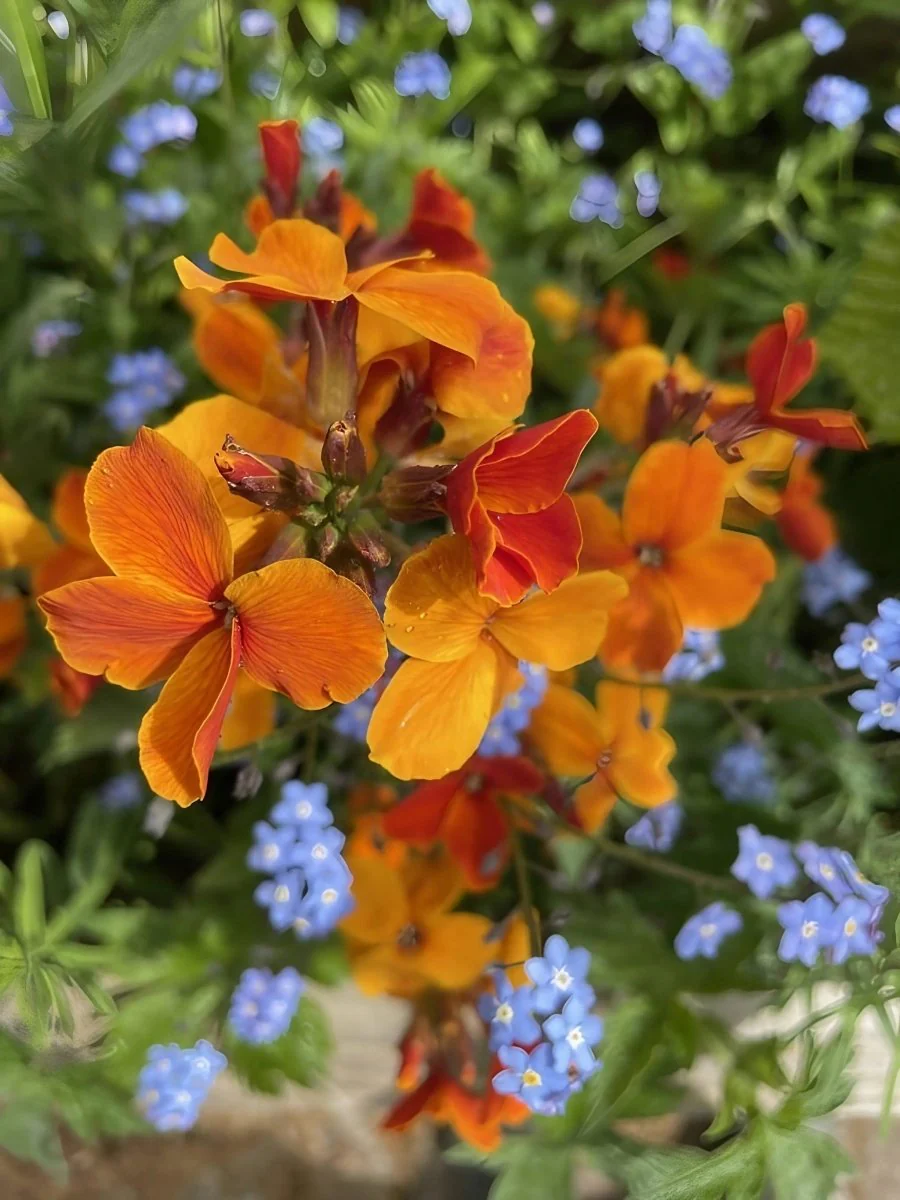
If you want to set your spring garden ablaze with colour, 'Fire King' is the undisputed choice. It produces dense spikes of brilliant, glowing scarlet-orange flowers that resemble burning embers or a dramatic setting sun. The petals possess a velvety texture that intensifies the richness of the bloom, making it a spectacular focal point for any spring bedding scheme.
Beyond its visual heat, 'Fire King' is legendary for its powerful fragrance. On warm spring afternoons, the plants release a heady, intoxicating perfume of honey, clove, and warm spice that can be detected from across the garden. It is a classic cottage garden staple, traditionally interplanted with cool blue carpets to create a high-energy, vibrant contrast that signals the true arrival of spring.
Read More
🌿 Understanding the Plant
Erysimum cheiri 'Fire King' is a Hardy Biennial (H5). It follows a precise two-year physiological cycle: seeds are sown in summer to develop a robust leafy rosette by autumn, which then fuels the spectacular floral display the following spring.
The Early Scent: Wallflowers are among the most essential early-season nectar sources in the UK. They bloom tirelessly from March through May, providing a vital lifeline for queen bumblebees as they emerge from their winter slumber. 'Fire King' is particularly noted for its resilience, standing up to the late frosts and winds of a British spring without losing its fiery intensity.
Wildlife Champion: This variety is proudly listed on the RHS Plants for Pollinators list. Its rich nectar and accessible blooms make it a primary target for early-season bees and butterflies seeking high-energy food sources.
🌱 Growing Guide
Wallflowers are exceptionally tough, provided they are given a sunny spot and free-draining soil.
How to Sow:
Sow outdoors in a nursery bed or modules from May to July. Surface sow onto moist compost and cover with a light dusting (5mm) of soil or vermiculite. Germination is quick and reliable, typically occurring within 14–21 days.
Where to Plant:
Transplant to their final positions in September or October. They demand full sun and thrive in slightly alkaline (lime or chalky) soils. If your soil is acidic or heavy clay, add plenty of horticultural grit to the planting hole to prevent winter root rot.
Ongoing Care:
The "Bushy" Secret: For the most spectacular show, "pinch out" the central growing tip when the plants are approximately 15cm tall. This forces the plant to produce multiple branching side-spikes, resulting in a much bushier habit and triple the number of flowers. Plant firmly to ensure they don't rock in winter gales.
📋 Plant Specifications
| Botanical Name | Erysimum cheiri 'Fire King' |
| Common Name | Scented Wallflower / Fire King |
| Plant Type | Hardy Biennial |
| Hardiness | H5 (Hardy through most of the UK) |
| Light Requirements | Full Sun ☀️ |
| Height | 35cm - 45cm |
| Spread | 30cm |
| Spacing | Plant 30cm apart |
| Flowering Period | March to May |
| Perfect For | 🔥 Hot Colour Borders 👃 Spicy Clove Scent 🐝 Emerging Queen Bees 🏺 Spring Pots |
| Seeds per Packet | Approximately 50 seeds |
🤝 Beautiful Garden Combinations
The intense scarlet-orange of 'Fire King' acts as a high-contrast spotlight for cool tones in the spring border :
- ❄️ Forget-me-not 'Victoria Mixed': Fire & Ice. The cool blues and whites of this Forget-me-not mix provide a stunning, frothy contrast to the fiery orange spikes. Both bloom simultaneously for a high-energy spring display.
- 🔵 Forget-me-not 'Blue' : The Classic Complement. Blue and orange are opposites on the colour wheel, making each other appear more vivid. This pairing creates a cheerful, traditional cottage garden look that buzzes with life.
📅 Sowing & Flowering Calendar
Sow in summer for flowers from March to May the following year.
🏆 RHS Plants for Pollinators
Wallflower 'Fire King' is listed on the RHS Plants for Pollinators list. It is widely recognized as one of the single most important early-spring nectar sources for queen bumblebees as they begin foraging after winter hibernation.
Original: $3.34
-65%$3.34
$1.17Product Information
Product Information
Shipping & Returns
Shipping & Returns
Description
Wallflower 'Fire King' Seeds
If you want to set your spring garden ablaze with colour, 'Fire King' is the undisputed choice. It produces dense spikes of brilliant, glowing scarlet-orange flowers that resemble burning embers or a dramatic setting sun. The petals possess a velvety texture that intensifies the richness of the bloom, making it a spectacular focal point for any spring bedding scheme.
Beyond its visual heat, 'Fire King' is legendary for its powerful fragrance. On warm spring afternoons, the plants release a heady, intoxicating perfume of honey, clove, and warm spice that can be detected from across the garden. It is a classic cottage garden staple, traditionally interplanted with cool blue carpets to create a high-energy, vibrant contrast that signals the true arrival of spring.
Read More
🌿 Understanding the Plant
Erysimum cheiri 'Fire King' is a Hardy Biennial (H5). It follows a precise two-year physiological cycle: seeds are sown in summer to develop a robust leafy rosette by autumn, which then fuels the spectacular floral display the following spring.
The Early Scent: Wallflowers are among the most essential early-season nectar sources in the UK. They bloom tirelessly from March through May, providing a vital lifeline for queen bumblebees as they emerge from their winter slumber. 'Fire King' is particularly noted for its resilience, standing up to the late frosts and winds of a British spring without losing its fiery intensity.
Wildlife Champion: This variety is proudly listed on the RHS Plants for Pollinators list. Its rich nectar and accessible blooms make it a primary target for early-season bees and butterflies seeking high-energy food sources.
🌱 Growing Guide
Wallflowers are exceptionally tough, provided they are given a sunny spot and free-draining soil.
How to Sow:
Sow outdoors in a nursery bed or modules from May to July. Surface sow onto moist compost and cover with a light dusting (5mm) of soil or vermiculite. Germination is quick and reliable, typically occurring within 14–21 days.
Where to Plant:
Transplant to their final positions in September or October. They demand full sun and thrive in slightly alkaline (lime or chalky) soils. If your soil is acidic or heavy clay, add plenty of horticultural grit to the planting hole to prevent winter root rot.
Ongoing Care:
The "Bushy" Secret: For the most spectacular show, "pinch out" the central growing tip when the plants are approximately 15cm tall. This forces the plant to produce multiple branching side-spikes, resulting in a much bushier habit and triple the number of flowers. Plant firmly to ensure they don't rock in winter gales.
📋 Plant Specifications
| Botanical Name | Erysimum cheiri 'Fire King' |
| Common Name | Scented Wallflower / Fire King |
| Plant Type | Hardy Biennial |
| Hardiness | H5 (Hardy through most of the UK) |
| Light Requirements | Full Sun ☀️ |
| Height | 35cm - 45cm |
| Spread | 30cm |
| Spacing | Plant 30cm apart |
| Flowering Period | March to May |
| Perfect For | 🔥 Hot Colour Borders 👃 Spicy Clove Scent 🐝 Emerging Queen Bees 🏺 Spring Pots |
| Seeds per Packet | Approximately 50 seeds |
🤝 Beautiful Garden Combinations
The intense scarlet-orange of 'Fire King' acts as a high-contrast spotlight for cool tones in the spring border :
- ❄️ Forget-me-not 'Victoria Mixed': Fire & Ice. The cool blues and whites of this Forget-me-not mix provide a stunning, frothy contrast to the fiery orange spikes. Both bloom simultaneously for a high-energy spring display.
- 🔵 Forget-me-not 'Blue' : The Classic Complement. Blue and orange are opposites on the colour wheel, making each other appear more vivid. This pairing creates a cheerful, traditional cottage garden look that buzzes with life.
📅 Sowing & Flowering Calendar
Sow in summer for flowers from March to May the following year.
🏆 RHS Plants for Pollinators
Wallflower 'Fire King' is listed on the RHS Plants for Pollinators list. It is widely recognized as one of the single most important early-spring nectar sources for queen bumblebees as they begin foraging after winter hibernation.