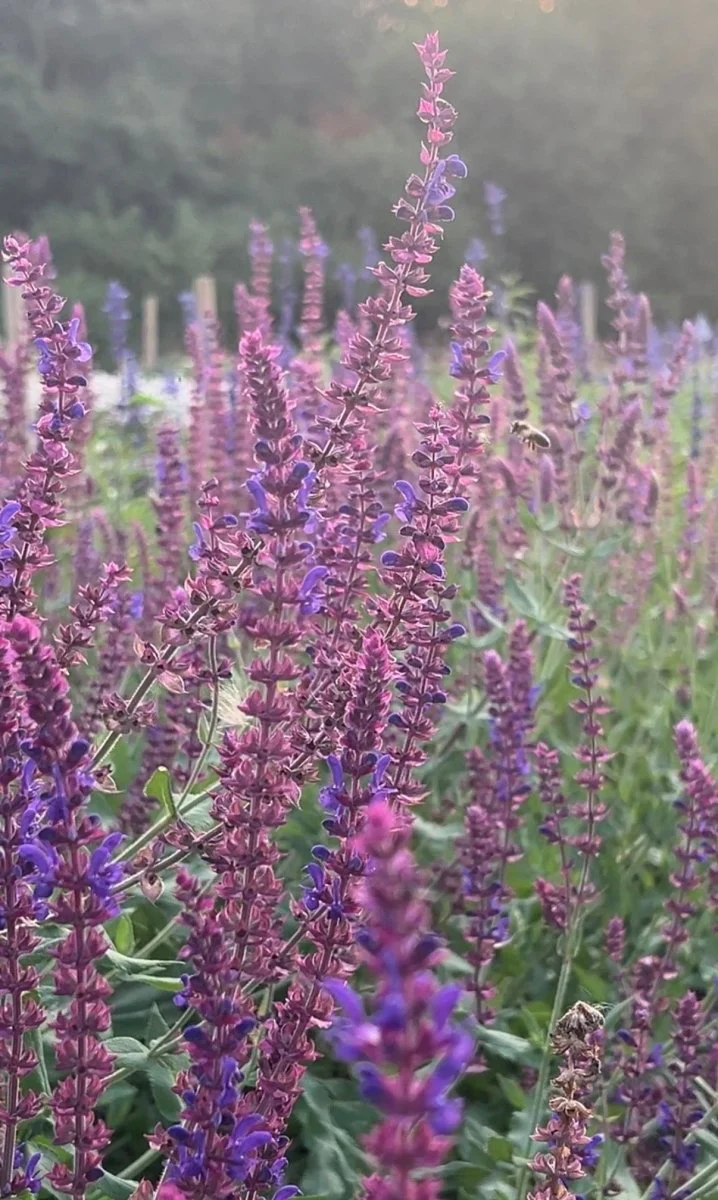
Salvia Violet Queen
Salvia 'Violet Queen' Seeds
Salvia 'Violet Queen' (Salvia nemorosa) is a high-performance hardy perennial that produces dozens of erect, slender spikes densely packed with tiny, intense violet-purple flowers. It serves as a stunning vertical accent in the garden, cutting through softer, mounded plants to add essential structure, rhythm, and depth to your borders.
Unlike many perennials that take years to establish, 'Violet Queen' is vigorous enough to flower in its very first summer if sown early. It is a true "pollinator magnet," officially recognised by the RHS for its ability to attract honeybees and butterflies, and it will reward the gardener with a second wave of colour in autumn if sheared back hard after the first summer flush.
Read More
🌿 Understanding the Plant
Salvia nemorosa 'Violet Queen' is a Hardy Perennial (H7). It is exceptionally resilient, capable of surviving the severest UK winters (down to -20°C) before re-emerging with fresh, aromatic foliage every spring.
Vertical Architecture: The stiff, upright violet spires provide a "structural spike" that contrasts beautifully with rounder flower shapes. It is drought-tolerant once established, making it perfect for the increasingly dry UK summers.
Pollinator Magnet: Listed on the RHS Plants for Pollinators list, this Salvia is known to "hum" with activity. Its nectar-rich spikes are an essential food source for bees and butterflies from June until the first frosts.
🌱 Growing Guide
Salvias are robust and low-maintenance, provided they are given maximum sunlight and sharp drainage.
How to Sow:
Sow indoors from February to May. Surface sow the seeds onto moist compost—do not cover as they require light to germinate. Maintain a temperature of 20°C. Seedlings typically appear in 14-21 days.
Where to Plant:
Plant out in May or June once the risk of frost has passed. They demand full sun and thrive in dry, sandy, or chalky soil. Crucial Tip: They hate "winter wet." If you have heavy clay, add plenty of grit to the planting hole to ensure the roots do not rot during the wet UK winter.
Ongoing Care:
For a second flush of colour in September, cut the spent flower spikes back to the ground immediately after the first display fades in July. To keep the plant bushy and stop it from flopping, you can perform the "Chelsea Chop" in late May, cutting the stems back by one-third.
📋 Plant Specifications
| Botanical Name | Salvia nemorosa 'Violet Queen' |
| Common Name | Wood Sage / Perennial Salvia |
| Plant Type | Hardy Perennial |
| Hardiness | H7 (Extremely Hardy) |
| Light Requirements | Full Sun ☀️ |
| Height | 40cm - 60cm |
| Spread | 45cm |
| Flowering Period | June to September |
| Perfect For | 🐝 Busy Bees 📐 Vertical Accents 🌦️ Drought Resistance 🏰 Gravel Gardens |
| Seeds per Packet | Approximately 50 seeds |
🤝 Beautiful Garden Combinations
The intense violet spikes of 'Violet Queen' are a designer's favourite for creating high-contrast palettes:
- 🎨 Achillea 'Cloth of Gold': The Complementary Contrast. Purple and yellow are opposite on the colour wheel, making them the perfect pair. The flat golden plates of Achillea provide a stunning textural contrast to the vertical Salvia spikes.
- ☁️ Ageratum 'Timeless Mix' : The Texture Blend. Pairing the sharp Salvia spikes with the soft, fuzzy "powder puffs" of Ageratum creates a sophisticated, multi-layered look in a calming blue-violet palette.
📅 Sowing & Flowering Calendar
Sow indoors in spring for a summer display that returns year after year.
🏆 RHS Plants for Pollinators
Salvia 'Violet Queen' is listed on the RHS Plants for Pollinators list. Its nectar-rich spires are a vital food source for honeybees and solitary bees, often becoming a hive of activity during the height of the English summer.
Product Information
Product Information
Shipping & Returns
Shipping & Returns
Description
Salvia 'Violet Queen' Seeds
Salvia 'Violet Queen' (Salvia nemorosa) is a high-performance hardy perennial that produces dozens of erect, slender spikes densely packed with tiny, intense violet-purple flowers. It serves as a stunning vertical accent in the garden, cutting through softer, mounded plants to add essential structure, rhythm, and depth to your borders.
Unlike many perennials that take years to establish, 'Violet Queen' is vigorous enough to flower in its very first summer if sown early. It is a true "pollinator magnet," officially recognised by the RHS for its ability to attract honeybees and butterflies, and it will reward the gardener with a second wave of colour in autumn if sheared back hard after the first summer flush.
Read More
🌿 Understanding the Plant
Salvia nemorosa 'Violet Queen' is a Hardy Perennial (H7). It is exceptionally resilient, capable of surviving the severest UK winters (down to -20°C) before re-emerging with fresh, aromatic foliage every spring.
Vertical Architecture: The stiff, upright violet spires provide a "structural spike" that contrasts beautifully with rounder flower shapes. It is drought-tolerant once established, making it perfect for the increasingly dry UK summers.
Pollinator Magnet: Listed on the RHS Plants for Pollinators list, this Salvia is known to "hum" with activity. Its nectar-rich spikes are an essential food source for bees and butterflies from June until the first frosts.
🌱 Growing Guide
Salvias are robust and low-maintenance, provided they are given maximum sunlight and sharp drainage.
How to Sow:
Sow indoors from February to May. Surface sow the seeds onto moist compost—do not cover as they require light to germinate. Maintain a temperature of 20°C. Seedlings typically appear in 14-21 days.
Where to Plant:
Plant out in May or June once the risk of frost has passed. They demand full sun and thrive in dry, sandy, or chalky soil. Crucial Tip: They hate "winter wet." If you have heavy clay, add plenty of grit to the planting hole to ensure the roots do not rot during the wet UK winter.
Ongoing Care:
For a second flush of colour in September, cut the spent flower spikes back to the ground immediately after the first display fades in July. To keep the plant bushy and stop it from flopping, you can perform the "Chelsea Chop" in late May, cutting the stems back by one-third.
📋 Plant Specifications
| Botanical Name | Salvia nemorosa 'Violet Queen' |
| Common Name | Wood Sage / Perennial Salvia |
| Plant Type | Hardy Perennial |
| Hardiness | H7 (Extremely Hardy) |
| Light Requirements | Full Sun ☀️ |
| Height | 40cm - 60cm |
| Spread | 45cm |
| Flowering Period | June to September |
| Perfect For | 🐝 Busy Bees 📐 Vertical Accents 🌦️ Drought Resistance 🏰 Gravel Gardens |
| Seeds per Packet | Approximately 50 seeds |
🤝 Beautiful Garden Combinations
The intense violet spikes of 'Violet Queen' are a designer's favourite for creating high-contrast palettes:
- 🎨 Achillea 'Cloth of Gold': The Complementary Contrast. Purple and yellow are opposite on the colour wheel, making them the perfect pair. The flat golden plates of Achillea provide a stunning textural contrast to the vertical Salvia spikes.
- ☁️ Ageratum 'Timeless Mix' : The Texture Blend. Pairing the sharp Salvia spikes with the soft, fuzzy "powder puffs" of Ageratum creates a sophisticated, multi-layered look in a calming blue-violet palette.
📅 Sowing & Flowering Calendar
Sow indoors in spring for a summer display that returns year after year.
🏆 RHS Plants for Pollinators
Salvia 'Violet Queen' is listed on the RHS Plants for Pollinators list. Its nectar-rich spires are a vital food source for honeybees and solitary bees, often becoming a hive of activity during the height of the English summer.