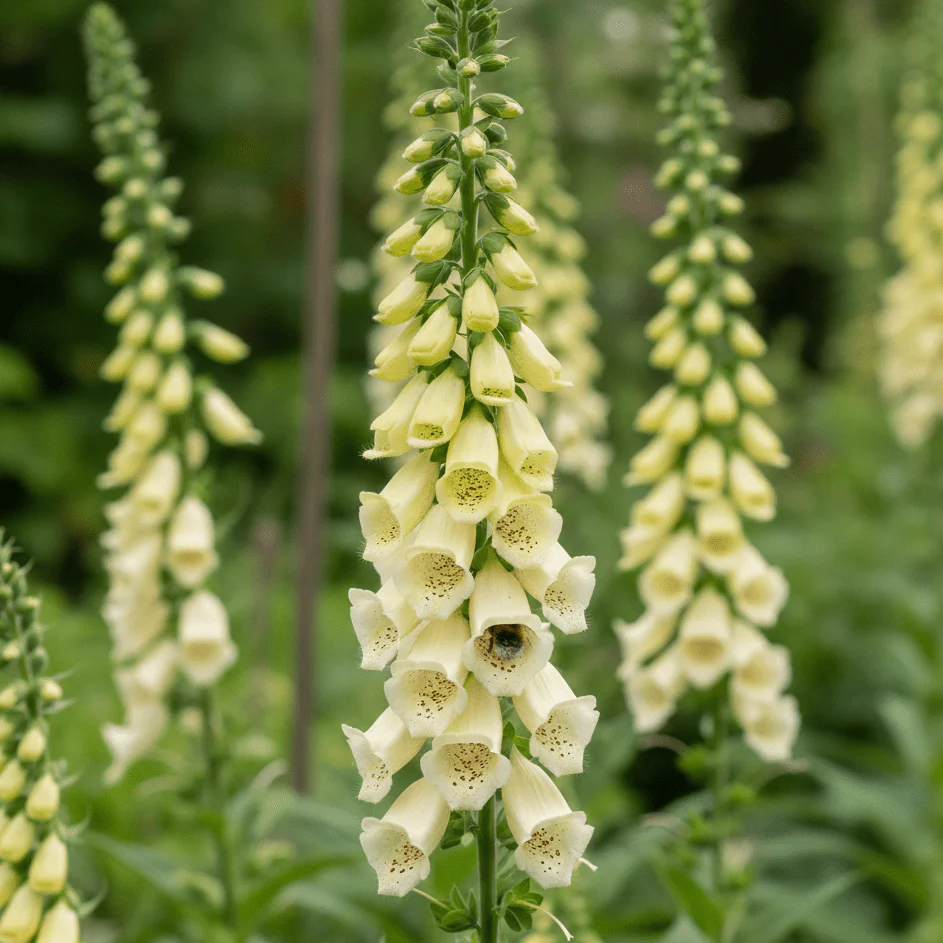
Foxglove Primrose Yellow
While the common purple Foxglove is a classic, 'Primrose Yellow' brings a whole new level of sophistication to the border. It produces tall, majestic spikes densely packed with soft, creamy-lemon bells, often speckled inside with tiny chocolate freckles.
This pale colour is incredibly valuable in garden design because it "lights up" dark corners. Plant it under trees, along a north-facing wall, or at the back of a border, and the pale yellow flowers will glow in the dim light. It is a favourite of bees (especially the long-tongued Carder bee) and adds instant height and drama to any cottage garden.
Read More
🌿 Understanding the Plant
Digitalis purpurea 'Primrose Yellow' is a robust Hardy Biennial (H7). It is perfectly adapted to the UK climate, surviving temperatures as low as -20°C. It operates on a two-year cycle: growing a lush rosette of soft, hairy leaves in its first year and exploding into its iconic flowering spires in its second.
Naturalizing Hero: While individual plants complete their life cycle after flowering, this variety is an excellent self-seeder. If you allow the seed heads to ripen and drop, you will establish a permanent, wandering colony that will provide your garden with free, elegant flowers year after year.
Pollinator Specialist: Listed on the RHS Plants for Pollinators list, Foxgloves are specially evolved to accommodate long-tongued bees, such as the Garden Bumblebee. The "landing platform" and internal speckled guide-marks ensure they are one of the most visited plants in a summer cottage garden.
🌱 Growing Guide
Foxglove seeds are exceptionally fine and require light to germinate, so they must never be buried deeply.
How to Sow:
Sow indoors in April to May or directly outdoors in June to July. Scatter the seeds onto the surface of moist, well-drained seed compost. Do not cover them with soil; a very fine sprinkling of vermiculite can be used but is not essential. Keep at 15-20°C; germination usually occurs within 14-21 days.
Where to Plant:
They thrive in shade or partial shade, making them the perfect solution for brightening the dark spots under deciduous trees or along north-facing fences. They prefer humus-rich, moisture-retentive soil. Squeezing in some leaf mould or organic compost before planting out will ensure the tallest, strongest spires.
Ongoing Care:
Move young plants to their final flowering positions in September or October so they can establish roots before winter. Once the main central spike has finished flowering in early summer, cut it down to the base; this often triggers the plant to send up several smaller side-shoots, extending the display through to August.
📋 Plant Specifications
| Botanical Name | Digitalis purpurea |
| Common Name | Foxglove 'Primrose Yellow' |
| Plant Type | Hardy Biennial |
| Hardiness | H7 (Ultra Hardy) |
| Light Requirements | Shade / Part Shade ⛅ |
| Height | 100cm - 120cm (Tall) |
| Spread | 45cm |
| Spacing | Plant 45cm apart |
| Flowering Period | May to July (Year 2) |
| Perfect For | 🌳 Under Trees & Shady Spots 🐝 Long-Tongued Bumblebees ☁️ Brightening Dark Borders 🏡 Traditional Cottage Style |
| Seeds per Packet | Approximately 1000 seeds (fine) |
🤝 Beautiful Garden Combinations
The soft creamy-lemon of 'Primrose Yellow' provides a sophisticated glow that pairs espectacularly with purples or whites from our collection:
- 💜 Purple Sweet Rocket (Hesperis) : The Woodland Pair. Both plants thrive in the same dappled shade conditions and flower simultaneously in early summer. The rich, vibrant violet of the Hesperis makes the pale lemon of the Foxglove look even more luminous and sophisticated.
- 🪙 Honesty (Lunaria annua) : The Spring Bridge. Honesty flowers slightly earlier than Foxgloves, providing a lush backdrop of heart-shaped leaves and green seed pods just as the Foxgloves reach their towering peak. They share the same wild, cottage garden aesthetic and thrive in identical soil.
📅 Sowing & Flowering Calendar
Sow in summer for architectural rosettes in Year 1, followed by majestic creamy-lemon spires in Year 2.
⚠️ Toxicity Warning
All parts of the Foxglove plant are highly toxic if ingested by humans or pets. We strongly recommend wearing gloves when handling the plants and keeping packets out of reach of small children.
🏆 RHS Plants for Pollinators
Foxgloves are a cornerstone of the RHS Plants for Pollinators list. They are specifically evolved to feed long-tongued British bumblebees, providing a critical high-summer food source in the cottage garden.
Product Information
Product Information
Shipping & Returns
Shipping & Returns
Description
While the common purple Foxglove is a classic, 'Primrose Yellow' brings a whole new level of sophistication to the border. It produces tall, majestic spikes densely packed with soft, creamy-lemon bells, often speckled inside with tiny chocolate freckles.
This pale colour is incredibly valuable in garden design because it "lights up" dark corners. Plant it under trees, along a north-facing wall, or at the back of a border, and the pale yellow flowers will glow in the dim light. It is a favourite of bees (especially the long-tongued Carder bee) and adds instant height and drama to any cottage garden.
Read More
🌿 Understanding the Plant
Digitalis purpurea 'Primrose Yellow' is a robust Hardy Biennial (H7). It is perfectly adapted to the UK climate, surviving temperatures as low as -20°C. It operates on a two-year cycle: growing a lush rosette of soft, hairy leaves in its first year and exploding into its iconic flowering spires in its second.
Naturalizing Hero: While individual plants complete their life cycle after flowering, this variety is an excellent self-seeder. If you allow the seed heads to ripen and drop, you will establish a permanent, wandering colony that will provide your garden with free, elegant flowers year after year.
Pollinator Specialist: Listed on the RHS Plants for Pollinators list, Foxgloves are specially evolved to accommodate long-tongued bees, such as the Garden Bumblebee. The "landing platform" and internal speckled guide-marks ensure they are one of the most visited plants in a summer cottage garden.
🌱 Growing Guide
Foxglove seeds are exceptionally fine and require light to germinate, so they must never be buried deeply.
How to Sow:
Sow indoors in April to May or directly outdoors in June to July. Scatter the seeds onto the surface of moist, well-drained seed compost. Do not cover them with soil; a very fine sprinkling of vermiculite can be used but is not essential. Keep at 15-20°C; germination usually occurs within 14-21 days.
Where to Plant:
They thrive in shade or partial shade, making them the perfect solution for brightening the dark spots under deciduous trees or along north-facing fences. They prefer humus-rich, moisture-retentive soil. Squeezing in some leaf mould or organic compost before planting out will ensure the tallest, strongest spires.
Ongoing Care:
Move young plants to their final flowering positions in September or October so they can establish roots before winter. Once the main central spike has finished flowering in early summer, cut it down to the base; this often triggers the plant to send up several smaller side-shoots, extending the display through to August.
📋 Plant Specifications
| Botanical Name | Digitalis purpurea |
| Common Name | Foxglove 'Primrose Yellow' |
| Plant Type | Hardy Biennial |
| Hardiness | H7 (Ultra Hardy) |
| Light Requirements | Shade / Part Shade ⛅ |
| Height | 100cm - 120cm (Tall) |
| Spread | 45cm |
| Spacing | Plant 45cm apart |
| Flowering Period | May to July (Year 2) |
| Perfect For | 🌳 Under Trees & Shady Spots 🐝 Long-Tongued Bumblebees ☁️ Brightening Dark Borders 🏡 Traditional Cottage Style |
| Seeds per Packet | Approximately 1000 seeds (fine) |
🤝 Beautiful Garden Combinations
The soft creamy-lemon of 'Primrose Yellow' provides a sophisticated glow that pairs espectacularly with purples or whites from our collection:
- 💜 Purple Sweet Rocket (Hesperis) : The Woodland Pair. Both plants thrive in the same dappled shade conditions and flower simultaneously in early summer. The rich, vibrant violet of the Hesperis makes the pale lemon of the Foxglove look even more luminous and sophisticated.
- 🪙 Honesty (Lunaria annua) : The Spring Bridge. Honesty flowers slightly earlier than Foxgloves, providing a lush backdrop of heart-shaped leaves and green seed pods just as the Foxgloves reach their towering peak. They share the same wild, cottage garden aesthetic and thrive in identical soil.
📅 Sowing & Flowering Calendar
Sow in summer for architectural rosettes in Year 1, followed by majestic creamy-lemon spires in Year 2.
⚠️ Toxicity Warning
All parts of the Foxglove plant are highly toxic if ingested by humans or pets. We strongly recommend wearing gloves when handling the plants and keeping packets out of reach of small children.
🏆 RHS Plants for Pollinators
Foxgloves are a cornerstone of the RHS Plants for Pollinators list. They are specifically evolved to feed long-tongued British bumblebees, providing a critical high-summer food source in the cottage garden.