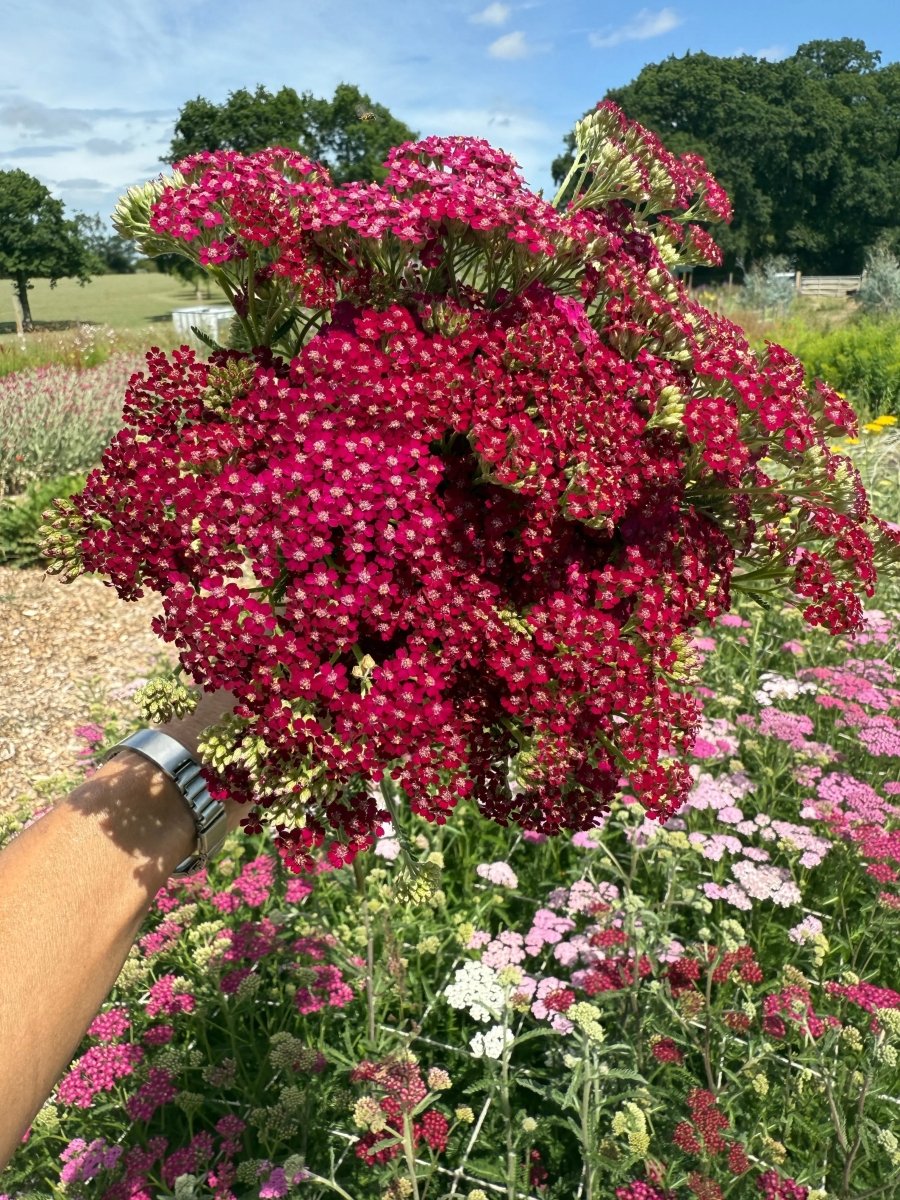
Achillea Rubra Red
Achillea 'Rubra' Red Seeds
Fiery cerise-red plates that fade into a multi-tonal sunset of soft pinks. A hardy, drought-tolerant native for a wildlife-rich cottage border.
If you are looking for a plant that laughs in the face of drought and still looks absolutely beautiful all summer long, Red Yarrow is your garden hero. This colourful variety of our native British wildflower produces large, flat-topped flower heads made up of hundreds of tiny, brilliant cerise-red blooms. As they mature, they fade gracefully through shades of soft pink, creating a lovely multi-tonal effect that makes each plant look like a miniature sunset in your border.
Loved for its "plant and forget" nature, 'Rubra' is as tough as it is glamorous. Its feathery, fern-like foliage is aromatic and stays semi-evergreen in mild winters, giving you attractive ground cover even when other perennials have died back for the year. But what really makes this plant special is its wildlife value—it is an absolute magnet for hoverflies, ladybirds, and solitary bees, making it an essential worker for any healthy, low-maintenance cottage garden.
Read More
🌿 Understanding the Plant
Achillea millefolium 'Rubra' is a robust Hardy Herbaceous Perennial. It represents the highest hardiness rating in the British Isles (H7), capable of withstanding temperatures below -20°C. Biologically, it is a quintessential "pioneer" species, adapted to colonise poor soils where it uses its feathery foliage to efficiently capture moisture and prevent evaporation.
The "Rubra" Profile: This specific cultivar is selected for its high concentration of anthocyanins, resulting in saturated cerise-red flower plates. Unlike the wild white species, 'Rubra' offers a sunset-spectrum display as the florets mature, providing significant visual interest in prairie-style plantings and naturalistic meadows.
Pollinator Haven: As an RHS Plant for Pollinators asset, Achillea is peerless for accessibility. The wide, flat-topped clusters act as "landing pads" for a vast array of British pollinators. It is particularly valued by hoverflies and ladybirds, whose presence provides natural biological pest control, predating on aphids throughout the summer months.
🌱 Growing Guide
Achillea seeds require specific light triggers and consistent warmth to break dormancy and ensure uniform germination.
How to Sow:
Sow indoors from February to April, or in September/October to overwinter. Surface sow the seeds onto moist, high-quality seed compost and do not cover them; Achillea seeds are photoblastic and require light to trigger germination. Simply press them gently into the surface to ensure contact. Maintain a consistent temperature of 15-20°C. Germination is reliable, typically occurring within 10-14 days.
Where to Plant:
They demand full sun to develop their most intense red pigments and thrive in "lean," well-drained soil. Avoid overly fertile ground, as high nitrogen levels will encourage weak, floppy growth at the expense of the flowers. Space plants 45cm apart to allow for their spreading, mounded habit. They are highly drought-tolerant once established.
Ongoing Care:
Keep the soil moist until established. To maintain a continuous display, remove the faded cerise plates; this signals the plant to produce a second wave of blooms in late summer. For a romantic winter aesthetic, leave the structural seed heads standing; they look spectacular when touched by frost and provide essential shelter for overwintering beneficial insects.
📋 Plant Specifications
| Botanical Name | Achillea millefolium 'Rubra' |
| Common Name | Red Common Yarrow / Milfoil |
| Plant Type | Hardy Native Perennial |
| Hardiness | H7 (Ultra Hardy - to -20°C) |
| Light Requirements | Full Sun ☀️ |
| Height | 60cm (Mounded & Feathery) |
| Spread | 60cm |
| Spacing | Plant 45cm apart |
| Flowering Period | June to September |
| Perfect For | 🐞 High-Biodiversity Native Gardens ✂️ Durable Cut & Everlasting Dried Flowers ☀️ Hot, Dry & Sun-Drenched Borders 🌿 Drought-Tolerant Prairie Planting |
| Seeds per Packet | Approximately 1,000 seeds |
🤝 Beautiful Garden Combinations
The flat, cerise plates of 'Rubra' work spectacularly with focal partners from our range:
- 💜 Verbena bonariensis: The Prairie Duo. A high-energy, professional-looking combination. The tall, airy purple clusters of Verbena float beautifully above the solid red plates of the Yarrow, creating a sophisticated, drought-tolerant display that is magnetic to butterflies.
- ☁️ Ammi Majus (Bishop's Flower) : The Cooling Contrast. For a romantic aesthetic, pair the intense red Yarrow with the delicate white lace of Ammi. The white filler acts as a "palate cleanser" in the border, making the warm cerise-red of the 'Rubra' truly stand out in the summer sun.
📅 Sowing & Flowering Calendar
Surface sow in spring or autumn for a summer-long harvest of cerise-red flower plates that will return faithfully to your borders year after year.
✨ Naturalistic Light Tip
Achillea seeds require light to wake up. Whether sowing indoors or in a greenhouse, ensure you do not cover the tiny seeds with soil. Simply scatter them onto the surface of the moist compost and pat them down firmly to ensure contact.
🏆 Robust Garden Stamina
Known for its stamina and ability to thrive in poor, dry soils, Achillea millefolium 'Rubra' is an essential choice for those wanting to create a romantic, low-maintenance garden that provides non-stop fiery interest for the border and local wildlife.
Product Information
Product Information
Shipping & Returns
Shipping & Returns
Description
Achillea 'Rubra' Red Seeds
Fiery cerise-red plates that fade into a multi-tonal sunset of soft pinks. A hardy, drought-tolerant native for a wildlife-rich cottage border.
If you are looking for a plant that laughs in the face of drought and still looks absolutely beautiful all summer long, Red Yarrow is your garden hero. This colourful variety of our native British wildflower produces large, flat-topped flower heads made up of hundreds of tiny, brilliant cerise-red blooms. As they mature, they fade gracefully through shades of soft pink, creating a lovely multi-tonal effect that makes each plant look like a miniature sunset in your border.
Loved for its "plant and forget" nature, 'Rubra' is as tough as it is glamorous. Its feathery, fern-like foliage is aromatic and stays semi-evergreen in mild winters, giving you attractive ground cover even when other perennials have died back for the year. But what really makes this plant special is its wildlife value—it is an absolute magnet for hoverflies, ladybirds, and solitary bees, making it an essential worker for any healthy, low-maintenance cottage garden.
Read More
🌿 Understanding the Plant
Achillea millefolium 'Rubra' is a robust Hardy Herbaceous Perennial. It represents the highest hardiness rating in the British Isles (H7), capable of withstanding temperatures below -20°C. Biologically, it is a quintessential "pioneer" species, adapted to colonise poor soils where it uses its feathery foliage to efficiently capture moisture and prevent evaporation.
The "Rubra" Profile: This specific cultivar is selected for its high concentration of anthocyanins, resulting in saturated cerise-red flower plates. Unlike the wild white species, 'Rubra' offers a sunset-spectrum display as the florets mature, providing significant visual interest in prairie-style plantings and naturalistic meadows.
Pollinator Haven: As an RHS Plant for Pollinators asset, Achillea is peerless for accessibility. The wide, flat-topped clusters act as "landing pads" for a vast array of British pollinators. It is particularly valued by hoverflies and ladybirds, whose presence provides natural biological pest control, predating on aphids throughout the summer months.
🌱 Growing Guide
Achillea seeds require specific light triggers and consistent warmth to break dormancy and ensure uniform germination.
How to Sow:
Sow indoors from February to April, or in September/October to overwinter. Surface sow the seeds onto moist, high-quality seed compost and do not cover them; Achillea seeds are photoblastic and require light to trigger germination. Simply press them gently into the surface to ensure contact. Maintain a consistent temperature of 15-20°C. Germination is reliable, typically occurring within 10-14 days.
Where to Plant:
They demand full sun to develop their most intense red pigments and thrive in "lean," well-drained soil. Avoid overly fertile ground, as high nitrogen levels will encourage weak, floppy growth at the expense of the flowers. Space plants 45cm apart to allow for their spreading, mounded habit. They are highly drought-tolerant once established.
Ongoing Care:
Keep the soil moist until established. To maintain a continuous display, remove the faded cerise plates; this signals the plant to produce a second wave of blooms in late summer. For a romantic winter aesthetic, leave the structural seed heads standing; they look spectacular when touched by frost and provide essential shelter for overwintering beneficial insects.
📋 Plant Specifications
| Botanical Name | Achillea millefolium 'Rubra' |
| Common Name | Red Common Yarrow / Milfoil |
| Plant Type | Hardy Native Perennial |
| Hardiness | H7 (Ultra Hardy - to -20°C) |
| Light Requirements | Full Sun ☀️ |
| Height | 60cm (Mounded & Feathery) |
| Spread | 60cm |
| Spacing | Plant 45cm apart |
| Flowering Period | June to September |
| Perfect For | 🐞 High-Biodiversity Native Gardens ✂️ Durable Cut & Everlasting Dried Flowers ☀️ Hot, Dry & Sun-Drenched Borders 🌿 Drought-Tolerant Prairie Planting |
| Seeds per Packet | Approximately 1,000 seeds |
🤝 Beautiful Garden Combinations
The flat, cerise plates of 'Rubra' work spectacularly with focal partners from our range:
- 💜 Verbena bonariensis: The Prairie Duo. A high-energy, professional-looking combination. The tall, airy purple clusters of Verbena float beautifully above the solid red plates of the Yarrow, creating a sophisticated, drought-tolerant display that is magnetic to butterflies.
- ☁️ Ammi Majus (Bishop's Flower) : The Cooling Contrast. For a romantic aesthetic, pair the intense red Yarrow with the delicate white lace of Ammi. The white filler acts as a "palate cleanser" in the border, making the warm cerise-red of the 'Rubra' truly stand out in the summer sun.
📅 Sowing & Flowering Calendar
Surface sow in spring or autumn for a summer-long harvest of cerise-red flower plates that will return faithfully to your borders year after year.
✨ Naturalistic Light Tip
Achillea seeds require light to wake up. Whether sowing indoors or in a greenhouse, ensure you do not cover the tiny seeds with soil. Simply scatter them onto the surface of the moist compost and pat them down firmly to ensure contact.
🏆 Robust Garden Stamina
Known for its stamina and ability to thrive in poor, dry soils, Achillea millefolium 'Rubra' is an essential choice for those wanting to create a romantic, low-maintenance garden that provides non-stop fiery interest for the border and local wildlife.